
Greening the refining process.
Your link can go here

"Multiplicity ought not to be posited without necessity."

Occam's Razor
William of Ockham (1285-1349)


Otherwise stated:
Everything should be as simple as possible, but not simpler.

Carbon Dioxide Reduction

Split Flow can save from 233 to 433 metric tonnes of CO2 per year


The Split Flow application can save significant electrical energy necessary to power the pump motor.

This energy savings results in less carbon dioxide emissions that otherwise would have been burned in the form of coal, natural gas, or other feedstocks for power plants.

In terms of power generation, Split Flow can save to save up to 50 kW, or 438,000 kWh per year. This results in the following carbon dioxide reductions for the two primary types of power generation in the United States:

  • Coal-fired plants:  433 metric tonnes of CO2 per year saved.

  • Natural gas-fired plants:  233 metric tonnes CO2 per year saved.

These figures were calculated based on the following statistics, provided by the U.S. Department of Energy, Energy Information Administration:


Average Coeficients for 2001 through 2005 (lbs/kWh)
Fuel
CO2
Coal 2.186
Natural gas 1.174
Petroleum 2.077
Fossil Fuel Avg. * 1.929
Geothermal 0.056
Municipal Waste ** 1.324
National Average ** 1.377

* Weighted on generation.
** Non-biomass component only.
*** For generation from all energy sources, including the above and from nuclear energy and renewables (biomass, hydro, solar, wind).


Calculations

DOE figures were applied in the following calculations:

1. Coal: 438,000 kWh (2.186) = 957,468 pounds of carbon dioxide saved.

  • To express in metric tonnes:
    957,468 lbs CO2 / 2,212 lbs per tonne = 433 metric tonnes

2. Natural gas: 438,000 kWh (1.174) = 514,212 pounds of carbon dioxide saved.

  • Expressed in metric tonnes:
    514,212 lbs CO2 / 2,212 lbs per tonne = 233 metric tonnes


Thank you for visiting us.
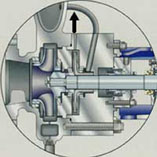
Split Flow API centrifugal pumps: Save energy, reduce carbon emissions.